
.jpg)
.png)
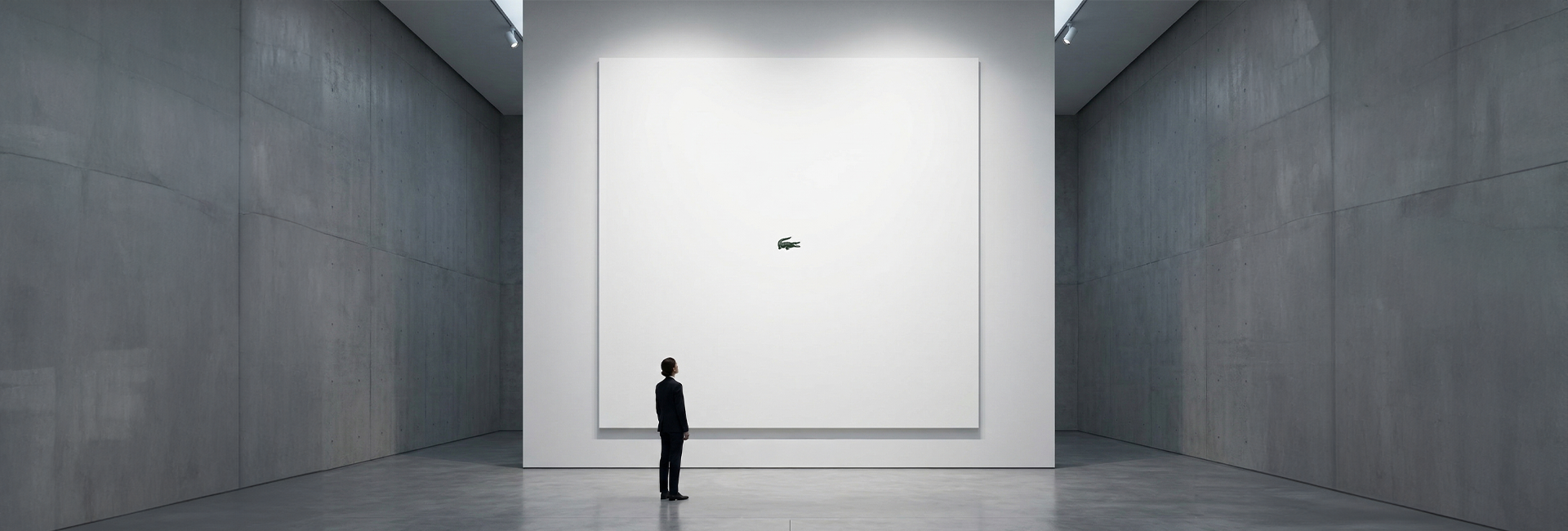
Why the most recognized mark in fashion has been the size of a coin for almost a century.
There’s a moment in every project. Somewhere between the second revision and the third, someone on the client side tilts their head slightly and says something. Not a big statement. Not a dramatic objection. Just a small remark, delivered casually, almost like an afterthought.
“Could we... make the logo a bit bigger?”
Six words. Perfectly polite. And almost never about the logo.
This is one of the most misunderstood moments in the relationship between a client and a creative team. Not because anyone is being dishonest, but because the language of design isn’t everyone’s first language. Clients feel things about their brand with absolute clarity. What they sometimes lack is the vocabulary to translate that feeling into a design instruction.
So they reach for the nearest available word.
Bigger.
But “bigger” is a symptom, not a diagnosis. When a client says the logo needs to be bigger, what they’re really expressing is a concern about presence. Will people notice us? Will our brand register? Will someone look at this and remember they saw it?
That’s not a design question. That’s a much bigger question. And it deserves a much deeper answer than adjusting a slider.
Because here’s the thing about visibility: it’s the wrong finish line.
You can put a logo on every surface. Every billboard. Every pixel of every screen. You can make it enormous. Unmissable. Physically impossible to overlook. And people will still look right through it. Not because they’re blind, but because they’re uninterested. The human eye is remarkably talented at filtering out things that don’t matter to it. Size doesn’t override that filter. Meaning does.
Nobody sees your logo. They see your story. They see the thing you did that made them feel something. The experience, the product, the moment that actually earned their attention. Only then does the mark you put on it begin to carry any weight.
A logo without a narrative behind it isn’t a brand identity. It’s wallpaper. And making wallpaper bigger doesn’t turn it into a Rembrandt.
Presence was never about volume.
There’s a reason the most recognized mark in fashion history has been the size of a coin for nearly a century. And that reason has absolutely nothing to do with design.
A suitcase nobody won.
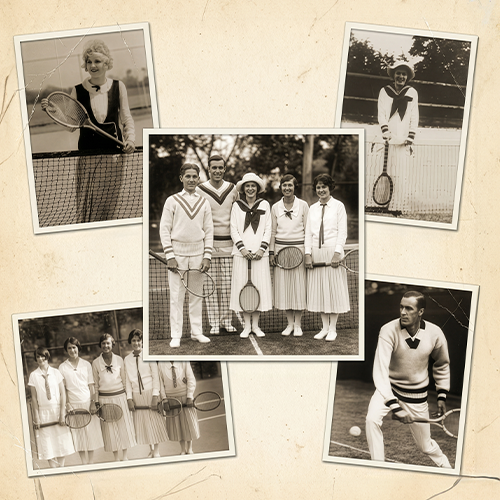
1923. René Lacoste is a young French tennis player with more ambition than trophies. His team captain makes him a bet: win the upcoming match, and the crocodile-skin suitcase in the shop window is yours. Lacoste loses. But the American press had already picked up the story, and the nickname stuck. They called him “The Alligator.” The French, naturally, corrected it to “Le Crocodile.”
Lacoste didn’t fight the name. He wore it.
Not just figuratively. In 1927, his friend Robert George, a designer with a playful streak, sketched a small crocodile. Mostly as a joke. Lacoste looked at it, smiled, and had it embroidered onto his white blazer. Then he walked onto the court with it sitting on his chest. Not as branding. Not as a strategic play. As a personal mark. The kind of quiet gesture that says I know exactly who I am without needing to raise its voice.
Think about the context. This was 1927. Every clothing brand in existence kept its name tucked inside on hidden labels and inner tags. The idea that a mark would sit on the outside of a garment, visible to everyone? That simply wasn’t done. Lacoste didn’t make his crocodile big. He just put it where nobody else had the nerve to.
But what actually made it work, what most retellings of this story conveniently skip, is that by the time that crocodile appeared on a blazer, it already meant something. A lost bet that became folklore. A nickname earned through play so relentless the press compared him to a predator. A reputation that preceded the symbol by years. The mark didn’t create the identity. The identity had already earned the mark.
Six years later, Lacoste and businessman André Gillier founded La Chemise Lacoste. The crocodile landed on the chest of the L.12.12, a polo shirt Lacoste had spent twelve prototypes perfecting because he refused to keep playing in the suffocating long-sleeved shirts the sport demanded. That small crocodile became the first logo ever displayed on the outside of a piece of clothing. The first. Barely the size of a thumb.
Ninety-two years later, it still hasn’t needed to be bigger. Not once. Because people were never looking at the crocodile. They were looking at everything the crocodile carried with it.
The depth we keep walking past.
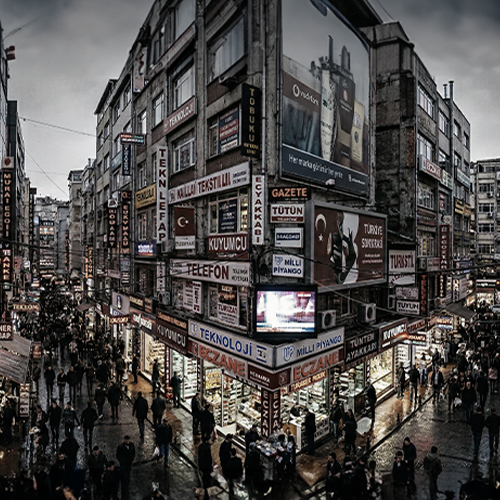
Our industry has a fascinating relationship with the word “visibility.” We’ve turned it into a metric. A KPI. A goal in itself. Reach. Impressions. Share of voice. We’ve built an entire vocabulary around being seen, and almost none around being worth seeing.
And at some point, somebody decided the sequence could be reversed. That if a brand just showed up enough, in enough places, at enough volume, people would eventually start to care. It’s a comforting thought. It’s also wrong.
The consumer never got that memo. They don’t see a logo and feel loyalty. They feel loyalty, and then they start noticing the logo. The order matters. It has always mattered. Lacoste understood this instinctively in 1927 and built one of the most enduring brand marks in history on that understanding.
And yet. Nearly a century later, the first instinct when something doesn’t feel visible enough is still the same. Make it bigger. Make it louder. More placements. More impressions. More.
We live in the loudest era in the history of human communication. Every brand is visible. Every mark is everywhere. The feed is infinite, the impressions are in the millions, and human attention has become the most contested real estate on earth. In that landscape, more volume is just more noise.
So maybe the interesting question isn’t how to be seen more. Maybe it’s why we became so obsessed with being seen in the first place, instead of becoming something worth seeing. Maybe the entire conversation around brand presence has been oriented around the wrong axis for decades, and we’ve just been too busy counting impressions to notice.
René Lacoste never asked anyone to make his crocodile bigger. He never needed to. He had already given it something that no amount of scaling, no media buy, no redesign can manufacture.
A reason to be looked at.
The question was never “is our logo big enough?”
It was always “have we built something that makes people want to find it?”
That’s not a design problem. That’s a depth problem. And it might be the only problem in branding that actually matters.